Unbounded territories exhibition June 16th – July 18th 2026 – Rabbit Gallery
1777 Avenue Rd second level, Toronto, ON M5M 3Y8, Canada
1777 Avenue Rd second level, Toronto, ON M5M 3Y8, Canada
Artists:
Dulce Pinzón
Dulce Pinzón
Sebastian Mejía
Otto Martin Moreno
Unbounded territories (Territoires sans frontières)
What does it mean to inhabit a space—bodily, emotionally, politically—without limits? Unbounded Territories brings together a group of artists whose practices traverse the porous boundaries between self and landscape, intimacy and public space, nature and construction, memory and projection. Across photography, and sculpture, the exhibition proposes territory not as a fixed geography, but as a mutable condition shaped by desire, time, and resistance.
Together, these practices map a constellation of territories that cannot be contained by borders. They are bodily and ecological, urban and digital, intimate and collective. In each work, freedom is not presented as an abstract ideal, but as an ongoing negotiation—fragile, contested, and deeply human.
Unbounded Territories invites us to reconsider the spaces we inhabit and the limits we accept. It suggests that perhaps paradise is not a place to be found, but a condition to be constructed—again and again—through acts of awareness, resistance, and imagination.
Artists
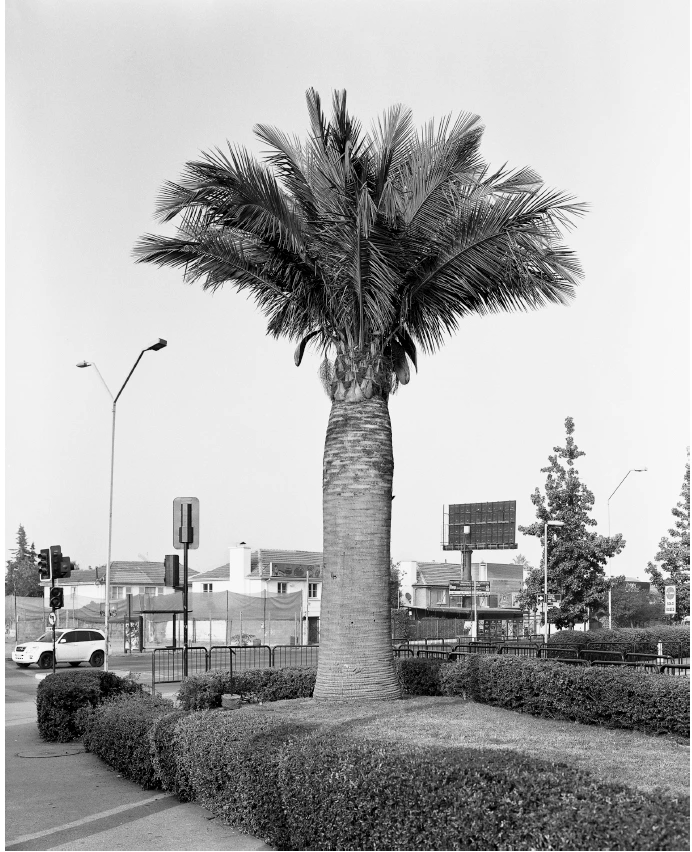
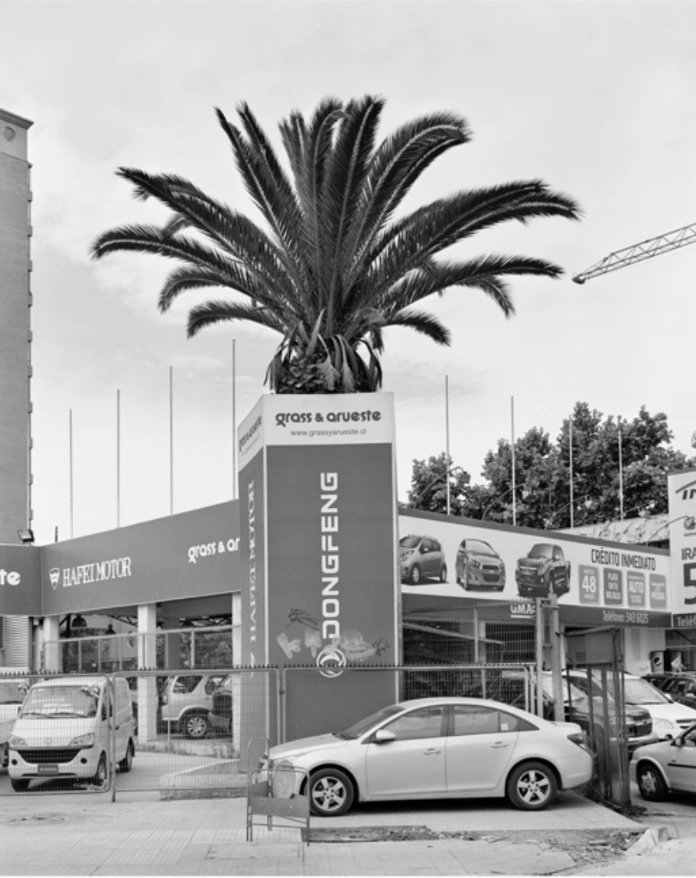
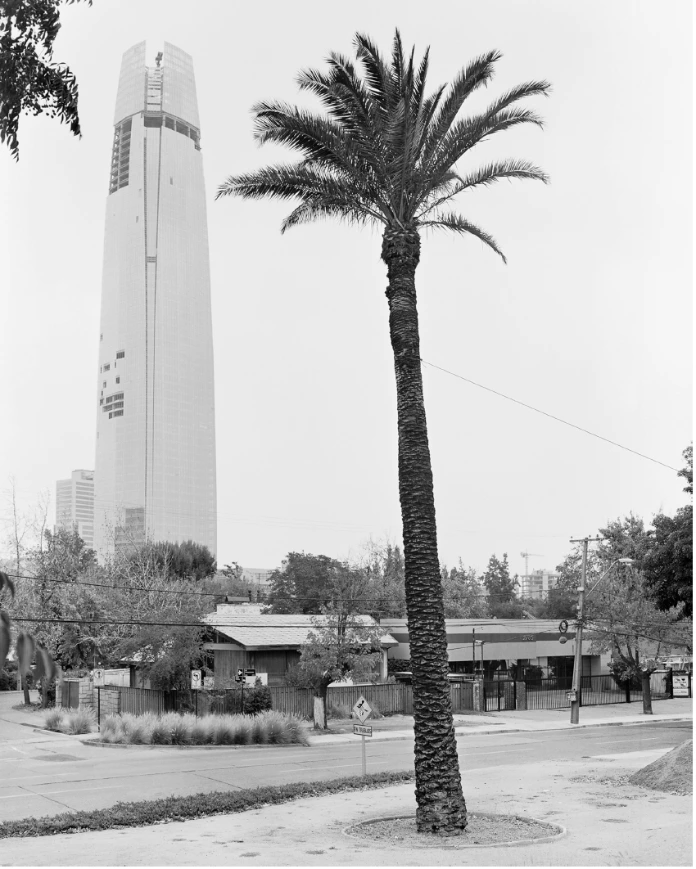
In Sebastián Mejía’s palm trees, the urban landscape of Santiago de Chile is punctuated by solitary vertical forms that oscillate between monument and anomaly. These trees, at once familiar and incongruous, act as silent witnesses to the city’s transformation. Mejía’s photographs echo archival practices and typological studies, yet they carry a quiet poetic charge: each palm becomes a marker of endurance, an elegant negotiation with gravity, light, and time. As botanical obelisks, they redefine territory through presence—suggesting that even within constructed environments, nature asserts its own forms of resilience.
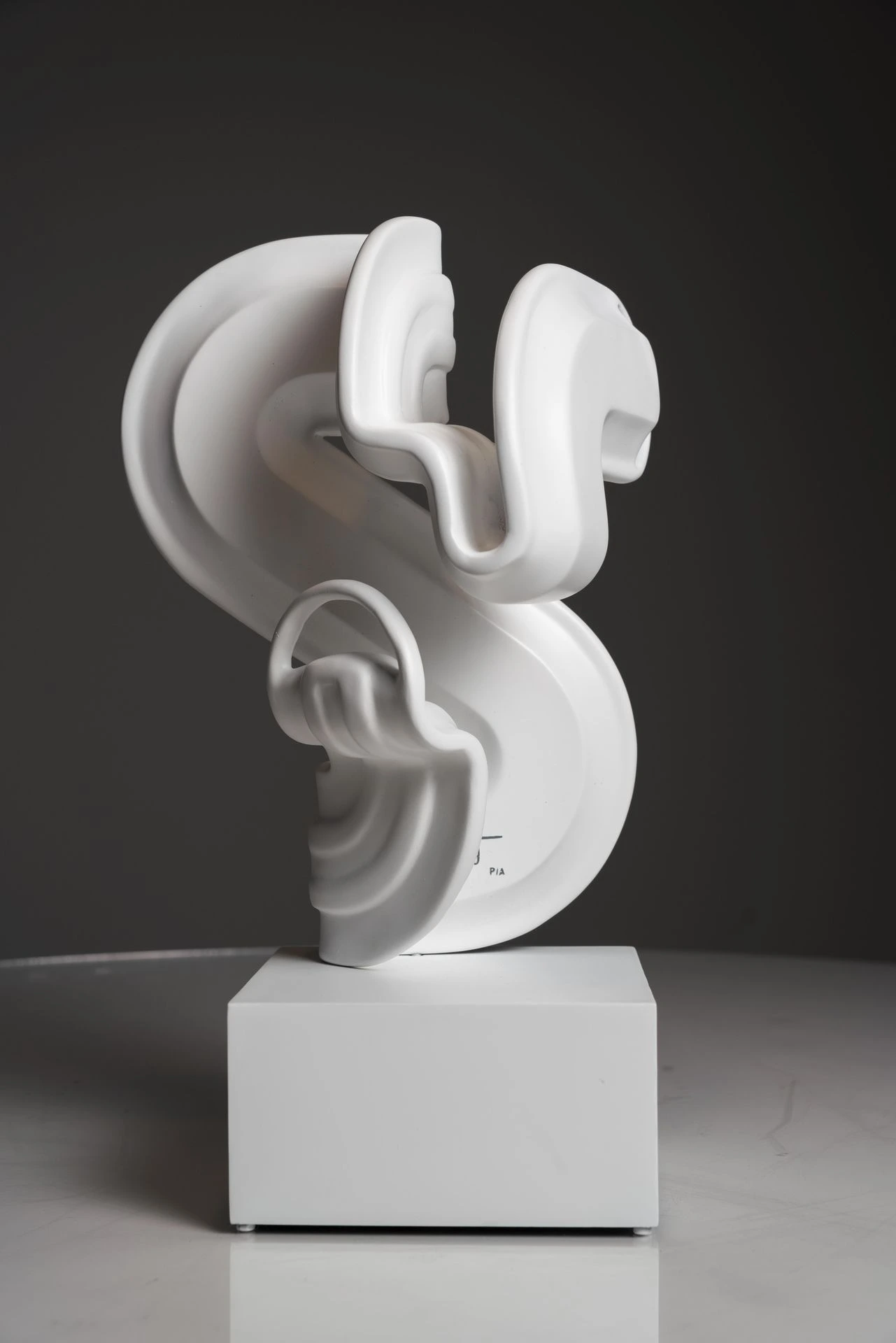
The sculptural work of Otto Martin Moreno extends the notion of territory into the realms of the industrial and the digital. His geometric, monochromatic compositions inhabit a space where material processes and virtual construction converge. Drawing from industrial fabrication techniques and digital modeling, Moreno interrogates how we perceive time—particularly in an era mediated by screens, anticipation, and constant loading. Rooted in the shifting urban fabric of Mexico City, his work reflects a continuous reorganization of forms, echoing the rhythms of a city—and a world—in perpetual construction.
Dulce Pinzón constructs a layered narrative where autobiography dissolves into fiction. Through performance and photographic staging, she reclaims the body as a site of both vulnerability and agency. The work navigates motherhood, pleasure, fertility, and transformation, confronting the silences imposed on women’s lived experiences. Here, territory is internal—marked by cycles, thresholds, and the quiet negotiations of identity.
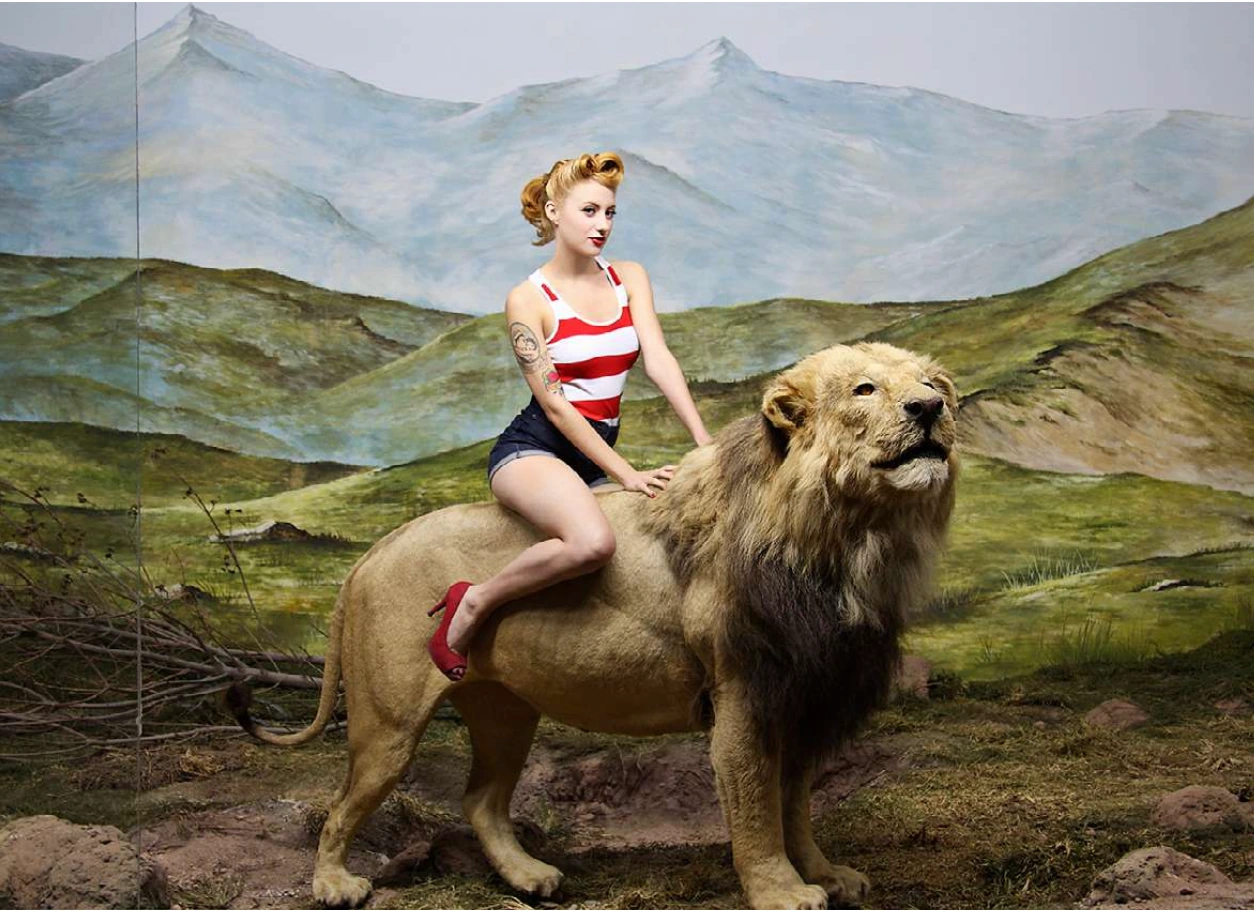
The photographic series Natural Beauty shifts the focus outward, yet remains deeply entangled with the human condition. Set within the abandoned Natural History Museum of Puebla, the work transforms a space of scientific display into a poetic allegory of ecological collapse. Taxidermy specimens and decaying installations become metaphors for a planet suspended between preservation and ruin. With irony and subtle surrealism, the artist reverses the gaze: humanity appears caged within the very systems it has constructed. Territory here becomes fragile, contested—a paradise not lost, but neglected.
Together, these practices map a constellation of territories that cannot be contained by borders. They are bodily and ecological, urban and digital, intimate and collective. In each work, freedom is not presented as an abstract ideal, but as an ongoing negotiation—fragile, contested, and deeply human.
Unbounded Territories invites us to reconsider the spaces we inhabit and the limits we accept. It suggests that perhaps paradise is not a place to be found, but a condition to be constructed—again and again—through acts of awareness, resistance, and imagination.
Artists
In Sebastián Mejía’s palm trees, the urban landscape of Santiago de Chile is punctuated by solitary vertical forms that oscillate between monument and anomaly. These trees, at once familiar and incongruous, act as silent witnesses to the city’s transformation. Mejía’s photographs echo archival practices and typological studies, yet they carry a quiet poetic charge: each palm becomes a marker of endurance, an elegant negotiation with gravity, light, and time. As botanical obelisks, they redefine territory through presence—suggesting that even within constructed environments, nature asserts its own forms of resilience.
The sculptural work of Otto Martin Moreno extends the notion of territory into the realms of the industrial and the digital. His geometric, monochromatic compositions inhabit a space where material processes and virtual construction converge. Drawing from industrial fabrication techniques and digital modeling, Moreno interrogates how we perceive time—particularly in an era mediated by screens, anticipation, and constant loading. Rooted in the shifting urban fabric of Mexico City, his work reflects a continuous reorganization of forms, echoing the rhythms of a city—and a world—in perpetual construction.
Dulce Pinzón constructs a layered narrative where autobiography dissolves into fiction. Through performance and photographic staging, she reclaims the body as a site of both vulnerability and agency. The work navigates motherhood, pleasure, fertility, and transformation, confronting the silences imposed on women’s lived experiences. Here, territory is internal—marked by cycles, thresholds, and the quiet negotiations of identity.
The photographic series Natural Beauty shifts the focus outward, yet remains deeply entangled with the human condition. Set within the abandoned Natural History Museum of Puebla, the work transforms a space of scientific display into a poetic allegory of ecological collapse. Taxidermy specimens and decaying installations become metaphors for a planet suspended between preservation and ruin. With irony and subtle surrealism, the artist reverses the gaze: humanity appears caged within the very systems it has constructed. Territory here becomes fragile, contested—a paradise not lost, but neglected.